

The Definitive Guide to Books About Savannah, GA: 29 Titles Worth Your Time
The landscape of books about Savannah is as layered as the city itself. Few American cities inspire such devotion —from historians who spend decades documenting her past, to novelists who set sweeping sagas in her moss-draped squares.
We read dozens of Savannah books to shortlist the most essential reads (you’re welcome).
We’ve organized recommendations for both broad searchers (“I just want a great book about Savannah”) and genre-specific readers (“Show me the best ghost books”).
Every recommendation is carefully curated, and still in print—something you can easily buy if you’re so inclined.
In a rush? Here’s the TL;DR (but read on for additional great choices):
Top 11 Books About (or Set In) Savannah, GA
| Category | Our Pick | Best For | Why It’s Great |
|---|---|---|---|
| Overall Best | You’ve Got to Be Kidding, Savannah | Locals & curious tourists | Factual, witty storytelling that reveals Savannah’s hidden side |
| First-Time Visitors | Moon Charleston & Savannah | Travelers planning a trip | Most comprehensive guide by a Savannah native, covers both cities |
| Best Visual Book | Savannah Square by Square | Coffee table book lovers | Gorgeous photos of all 22 squares |
| Best for Gifting | You’ve Got to Be Kidding, Savannah | Readers interested in the hidden side of the city | Smart and entertaining for locals and tourists alike |
| Deep Dive | Charleston and Savannah (Wilson) | Serious history enthusiasts | Comprehensive modern history—scholarly comparative study through 2023 |
| History | Savannah Revisited | Visual learners & history lovers | Lavishly illustrated, scholarly—the definitive classic since the 1970s |
| Historical Fiction | Surviving Savannah | Fans of dual timelines | 1838 shipwreck disaster meets modern-day mystery—gripping and well-researched |
| Romance | One Summer in Savannah | Readers who want depth + feels | Trauma, healing, and second chances—serious contemporary romance with social relevance |
| True Crime | Midnight in the Garden of Good and Evil | Anyone curious about Savannah | The book that “made Savannah famous”—murder, eccentrics, and Southern Gothic atmosphere |
| Ghosts | Haunted Savannah (Caskey) | Ghost enthusiasts | 40+ hauntings with investigative depth—the most authoritative paranormal guide |
| Travel Guide | Fodor’s InFocus Savannah | Short-trip visitors | Curated highlights, quick itineraries, updated 2024—efficient and trustworthy |
How to Use This Guide
Start with our curated picks below if you’re browsing generally, or jump directly to your category. We’ve been ruthlessly selective—most categories feature just 2-3 books, the ones truly worth your time and money.
The Best Overall Books About Savannah
Our Top Pick
You’ve Got to Be Kidding, Savannah by GyroPress (2025)
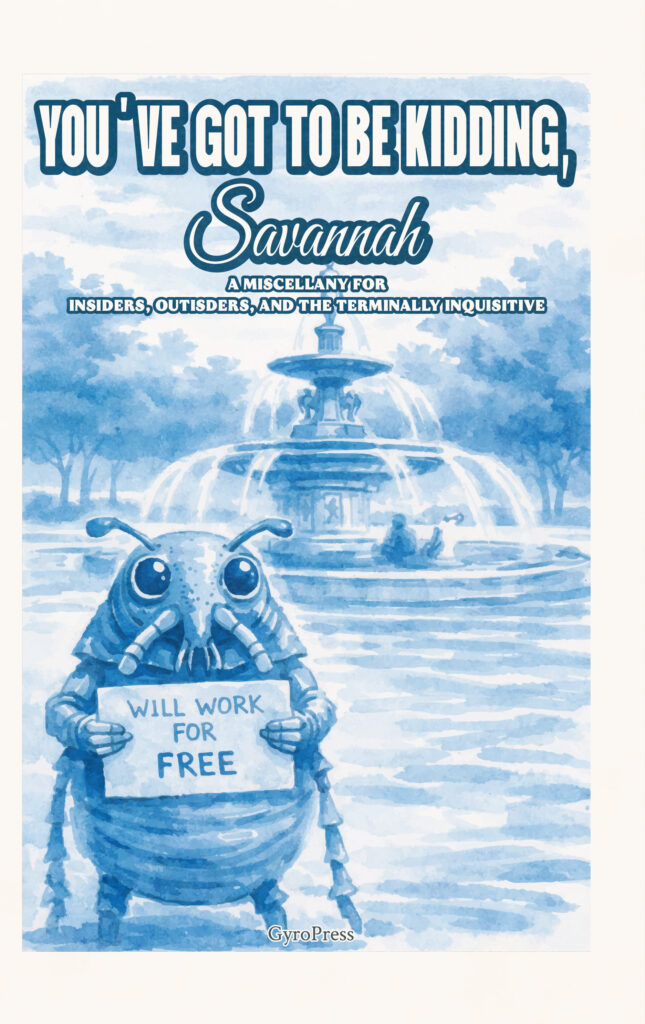
What it covers: Twenty-four research-driven stories exploring the lesser-known side of Savannah’s history. Topics range from colonial-era construction methods to 20th-century geopolitical events, from natural phenomena to economic transformations.
Why it’s the best: This is the book that makes you see Savannah differently. Deeply researched, with fun storytelling—these are the stories you won’t find in traditional guidebooks or histories, but rather, the ones that reveal why this city is genuinely fascinating beyond its moss-draped reputation. Accessible, entertaining, and Savannah-specific.
Who it’s for: Long-time residents, first-time visitors, armchair travelers, or anyone curious about Savannah beyond the ghost stories and tourist traps. Pick this if you’re the sort who loves finding out why things are the way they are.
Tone/approach: Humorous and well-researched. The writing is engaging and accessible—think popular science meets local history meets geography trivia. Each chapter stands alone, so you can jump around based on what interests you. The funny illustrations add to the humor, and the pacing keeps you hooked.
Formats: Hardcover ($39)
Alternate Pick
Savannah in History: A Guide to More Than 75 Sites in Historical Context by Rodney Carlisle & Loretta Carlisle (2019)
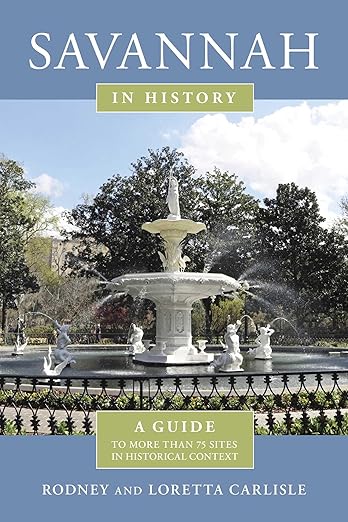
What it covers: Over 90 historic Savannah sites organized chronologically—colonial foundations through Revolutionary War, Civil War, 20th century, into the present. Each era gets its own chapter with full-color photographs and accessible historical commentary.
Why we picked it: This is what happens when a Rutgers emeritus historian writes a guidebook. You get authoritative depth without academic density, and practical site-by-site guidance. It shows you where history happened while explaining why it matters—the layered nature of Savannah made tangible.
Who it’s for: First-time visitors who want substance and locals seeking deeper appreciation of familiar landmarks. If you plan to walk Savannah’s historic district, this transforms your experience from pretty scenery into genuine understanding.
Tone/approach: Straightforward and informative without being dry. The format (short sections tied to specific sites) lets you read cover-to-cover or dip in selectively.
Formats: Paperback ($15), eBook
Best Savannah Books by Genre
Historical Nonfiction
Savannah in the Old South by Walter J. Fraser Jr. (2003)
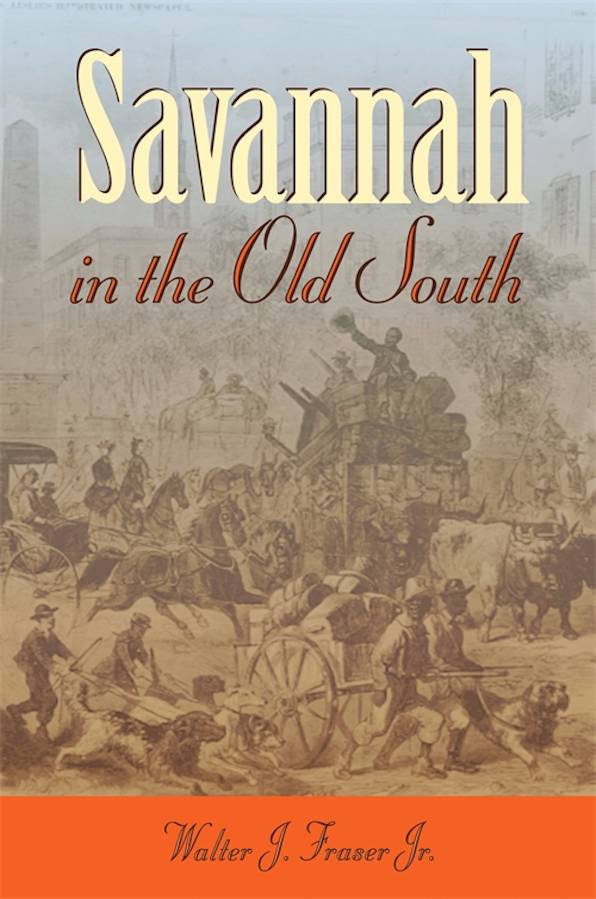
What it covers: Comprehensive scholarly narrative from Savannah’s 1733 founding through the Civil War’s end in 1865. Fraser chronicles how war, disease, economic cycles, fires, and politics shaped the city’s first 132 years, drawing on extensive primary sources.
Why it matters: Often regarded as the definitive academic history of early Savannah. Fraser’s rigorous research and inclusive approach (notably integrating African American experiences more thoroughly than previous histories) make it foundational for understanding the city’s formative years.
Who it’s for: History enthusiasts and residents wanting thorough, factual coverage of colonial and antebellum heritage. Fraser’s clear narrative style keeps it accessible despite scholarly rigor—ideal for deep divers ready to commit to 415 pages.
Tone/approach: Detailed narrative history with analytical insights. Academic in the best sense—thorough yet engaging, with vivid anecdotes bringing the past to life.
Formats: Paperback ($37)
Civil War in Savannah
Civil War Savannah by Derek Smith (1997)
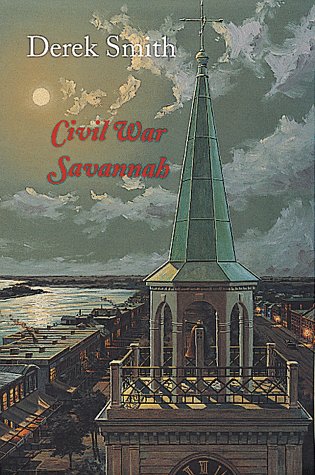
What it covers: Narrative history of Savannah’s Civil War experience from just before secession (1860) through the war and aftermath. Smith’s 305-page account proceeds year-by-year: secession sentiment, war preparations, Union blockade, Fort Pulaski’s fall, economic hardships, and the climactic 1864 events when General Hardee evacuated as Sherman approached.
Why it matters: Essentially the cornerstone one-volume history of Savannah’s Civil War years. Smith dispels the notion that little happened here by providing comprehensive, engaging narrative covering everything from Sherman’s march to lesser-known incidents. You come away understanding how war affected Savannah economically, socially, and militarily.
Who it’s for: Savannah locals/visitors with an interest in this era—those touring Fort Pulaski or Civil War cemeteries who want enriching context. Also for Civil War enthusiasts wanting to go beyond Gettysburg.
Tone/approach: Narrative and readable with a nice flow through the years. Smith highlights human-interest elements alongside military movements. Straightforward prose with maps and photos.
Formats: Paperback ($20), Hardcover
General Sherman’s Christmas: Savannah, 1864 by Stanley Weintraub (2009)
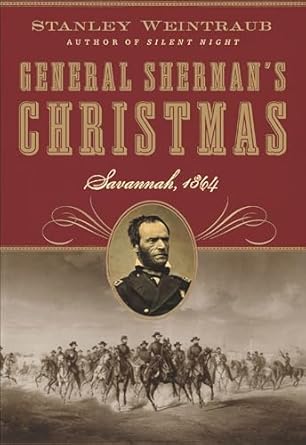
What it covers: Dramatic narrative of Savannah’s capture in December 1864, framed around the holiday. Weintraub zooms in on roughly one month as Sherman’s army completed the “March to the Sea.” Alternates between Union and Confederate perspectives using diaries and letters.
Why it matters: Provides focused lens on one of Savannah’s most pivotal events with compelling narrative tension. Reads almost like a thriller.
Who it’s for: Military history enthusiasts and general readers alike. Doesn’t require deep Civil War knowledge.
Tone/approach: Narrative, dramatic, and richly descriptive. Weintraub writes with storyteller’s flair, often using present tense for immediacy.
Formats: Hardback ($19), eBook, audiobook
Historical Fiction
Surviving Savannah by Patti Callahan (2021)
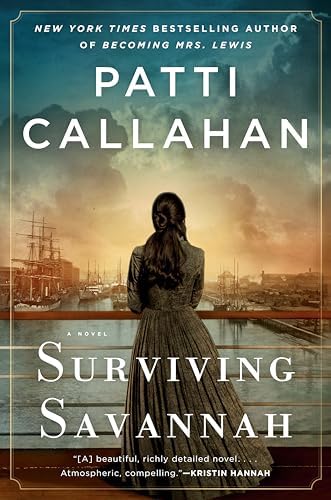
What it covers: Dual-timeline novel. In 1838, the steamship Pulaski (the “Titanic of the South”) sinks carrying Savannah aristocrats. In the present, a museum curator uncovers the wreck and pieces together survivors’ stories.
Why it’s a standout: Blends meticulous historical detail with suspenseful discovery. Makes a little-known maritime disaster accessible and emotionally engaging. Think Titanic meets Savannah’s haunted past. Balances research rigor with story-driven momentum.
Who it’s for: Fans of dual-timeline narratives (Susanna Kearsley, Kate Morton) and history buffs interested in Savannah’s maritime lore. First-time visitors get context; locals appreciate the depth.
Tone/approach: Atmospheric and poignant. Historical sections are rich and eventful; modern sections feel like detective work. Vivid but accessible writing focusing on human resilience.
Formats: Hardback ($19), Paperback, eBook, audiobook
Romance
Savannah Blues by Mary Kay Andrews (2002)
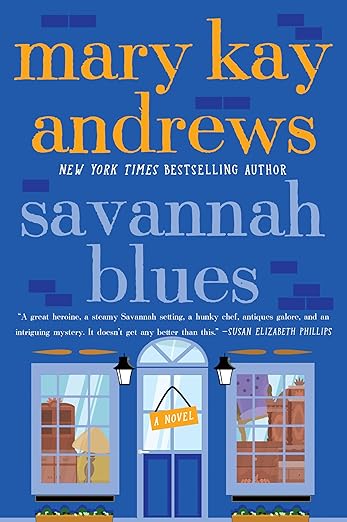
What it covers: Southern romantic comedy with mystery. Recently divorced antiques picker Eloise “Weezie” Foley tries reclaiming her historic home from her ex while navigating estate sales and garden parties. She stumbles onto a murder mystery and teams up with a charming new suitor.
Why it’s great: Oozes Savannah charm and humor. Written by a longtime Savannah/Tybee resident—the city practically becomes a character. Stands out for its mature, relatable heroine (Weezie is 40-ish, starting over) and sassy wit. The mystery subplot adds extra spice beyond typical romance.
Who it’s for: Fans of chick-lit and cozy mysteries (Janet Evanovich, Emily Giffin). Those planning Savannah trips will love how it doubles as fun locale tour. Appeals broadly—many readers love it even if romance isn’t their usual genre.
Tone/approach: Lighthearted, sassy, warm. Conversational writing filled with Southern colloquialisms. Upbeat with plenty of banter and vividly comedic set-pieces.
Formats: Hardback ($21), Paperback, audiobook
True Crime
Midnight in the Garden of Good and Evil by John Berendt (1994)
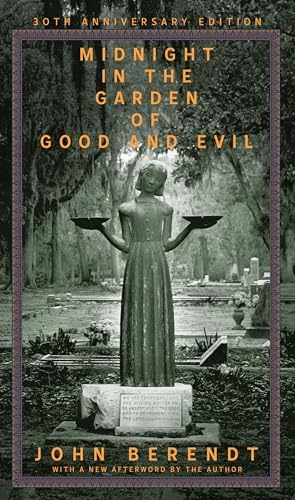
What it covers: It’s on all the top lists for a reason. Set in 1980s Savannah, this nonfiction novel paints atmospheric portrait of the city’s eccentric high society entwined with sensational murder trial. Berendt chronicles four murder trials. Beyond courtroom drama, introduces unforgettable real-life cast: drag queen Lady Chablis, voodoo priestess Minerva, society matrons, con men.
Why it’s great: Often called the book that “put Savannah on the map.” Essential for sense of place and cultural impact. Berendt blends meticulous nonfiction reporting with novelistic prose. Offers the most immersive depiction of a Savannah murder case.
Who it’s for: Readers who don’t normally read true crime but are drawn to Southern Gothic ambiance or character-driven stories. Also for true-crime aficionados interested in legal battles.
Tone/approach: Polished, evocative. Often Southern Gothic—highlights eerie, mystical side against polite society backdrop.
Formats: Hardback ($13), Paperback, eBook
Mystery Fiction
The Kingdoms of Savannah by George Dawes Green (2022)
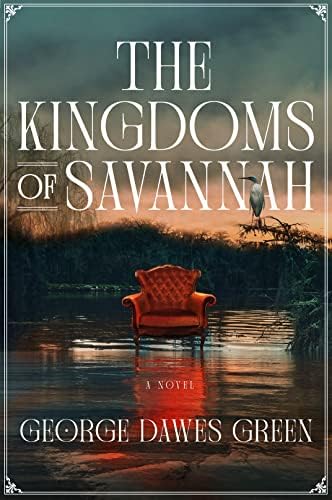
What it covers: Literary Southern noir entangling prominent Savannah family in dangerous investigation of city’s seedy underbelly. When homeless man and young woman are murdered downtown, matriarch Morgana Musgrove investigates to protect family reputation. Blends real Savannah history with propulsive whodunit.
Why it’s a must-read: Green uses mystery to explore Savannah’s social stratifications and historical wounds. The city’s character is front and center: enchanting beauty and grotesque underbelly. Top-tier writing.
Who it’s for: Fans of Southern Gothic (Flannery O’Connor, True Detective Season 1) and anybody who appreciates dark atmosphere. Not a cozy mystery; suited to readers who like grit and commentary.
Tone/approach: Moody, intricate, bold. Ranges from suspenseful to contemplative. Multi-POV creates mosaic of Savannah lives.
Formats: Hardcover ($28), paperback, eBook, audiobook.
All the Dangerous Things by Stacy Willingham (2023)
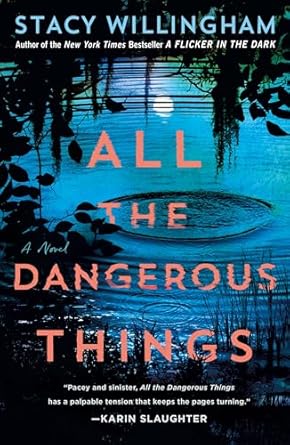
What it covers: Gripping psychological thriller about mother’s quest to find missing child. Isabelle Drake’s toddler son Mason was kidnapped from his crib a year ago. She digs deeper, but secrets from her past surface. Savannah setting adds sultry, suspenseful atmosphere.
Why it’s compelling: Reese’s Book Club pick. Willingham, Savannah native, uses city’s ambiance masterfully. Narrative’s focus on insomnia is fresh—extreme sleep deprivation creates unreliable-narrator territory. Mystery tightly constructed with jaw-dropping twists.
Who it’s for: Perfect for psychological thriller fans and true crime enthusiasts. If you devoured Gone Girl or The Silent Patient, this fits with distinct Savannah flavor. Content can be dark—more for mature audiences.
Tone/approach: Suspenseful, disorienting, emotionally charged. Tense from the first chapter. Despite the high tension, prose is quite lyrical describing Savannah marshlands and thunderstorms.
Formats: Hardcover ($28), eBook, audiobook
Architecture
Savannah Square by Square by Michael L. Jordan (6th printing 2022)
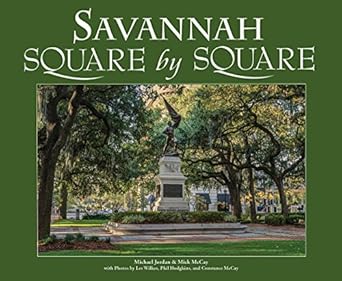
What it covers: A 112-page coffee-table book devoted to all 22 of Savannah’s historic squares (including two no longer existing). Features over 300 full-color photographs with deeply researched narratives for each square. Readers learn each square’s namesake, history, and notable surrounding buildings.
Why it matters: Uniquely combines stunning imagery with factual stories, giving tourists and history buffs rich understanding of Savannah’s layout and each square’s significance.
Who it’s for: Ideal for those enchanted by Savannah’s Historic District—visitors wanting context for walks, locals proud of heritage.
Tone/approach: Informative yet accessible. Enthusiastic, history-rich tone but not academic—reads like knowledgeable local showing you around.
Formats: Hardcover ($39)
Savannah Then and Now – People and Places by Polly W. Cooper (2016)
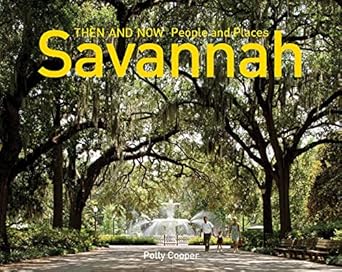
What it covers: Before-and-after photographic history. Each section pairs vintage historic photo with modern photo of same location, showing how Savannah’s squares, streets, buildings transformed or remained intact over time.
Why it matters: Uniquely celebrates Savannah’s historic preservation by showing “then” (often mid-20th-century neglect) versus “now” (beautifully restored). Underscores how far city has come. Few cities have such vivid photographic record of renewal.
Who it’s for: Perfect for history enthusiasts, architecture buffs, longtime Savannah fans. Even casual readers enjoy side-by-side format—like time-traveling tour.
Tone/approach: Largely visual with informative captions. Accessible storytelling style with fascinating tidbits.
Formats: Hardcover ($20)
Travel Guide
Charleston & Savannah by Jim Morekis (9th ed. 2022)
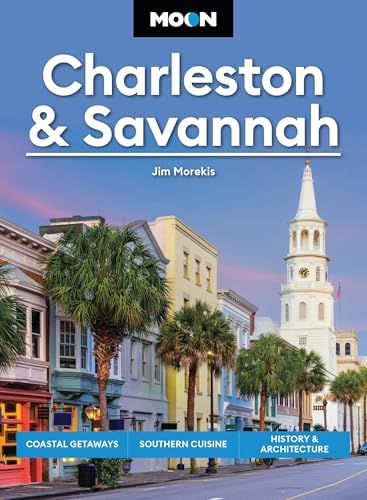
What it covers: Practical tips with cultural context: detailed neighborhood maps, photos, 10-day Charleston–Savannah itinerary, suggested day trips to Hilton Head, Lowcountry, Golden Isles. Provides background on local history and culture, making it both travel guide and regional primer.
Why it matters: Excels in detail and accuracy—well-researched historical anecdotes plus up-to-date restaurant/hotel tips. Uniqueness lies in balancing practical info with cultural background, giving strong sense of place alongside logistics.
Who it’s for: Ideal for first-time visitors wanting thorough overview and seasoned travelers seeking hidden gems. If you have several days or more in area and want single authoritative guidebook, this is go-to.
Tone/approach: Friendly and culturally rich. Morekis’s writing is crisp, down-to-earth, reflecting independent traveler focus. Provides candid opinions and includes tips for different budgets/traveler types.
Recommended format: Paperback ($22), eBook
Fodor’s InFocus Savannah (7th ed. 2024)
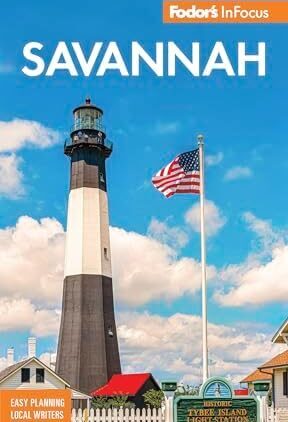
What it covers: Guidebook focused on Savannah and nearby areas. Includes multiple itineraries (2 days vs. 5 days), over a dozen maps, “Best of” lists. Practical info on navigating, saving money.
Why it’s useful: InFocus series shines for travelers wanting quick, trustworthy recommendations without overwhelming detail. Value lies in efficient planning—open to “top 10” list or one-page itinerary and instantly figure out what to do.
Who it’s for: Great for short-trip visitors or first-timers wanting expert picks at a glance.
Tone/approach: “Curator” style—shorter descriptions getting to the point. Confident, helpful tone. Highlights classic experiences with honest recommendations.
Formats: Paperback ($15), eBook
Hiking & Trails
Hiking Georgia by Jimmy Jacobs (5th ed. 2020)
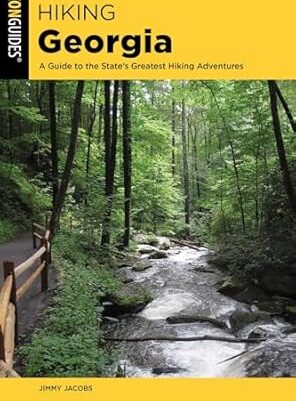
What it covers: Over 70 hiking trails across Georgia. Includes trails in Savannah area and Georgia coast. For each hike: detailed route description, step-by-step directions, map, coordinates. In Savannah vicinity: Skidaway Island State Park trails, barrier islands (Cumberland, Sapelo), coastal wildlife refuges.
Why it’s useful: Particularly useful in Savannah region because few other guides cover coastal and Lowcountry trails in such detail. Praised for clear directions and maps. GPS-tracked maps and trailhead coordinates big plus for safety.
Who it’s for: If you’re based in Savannah looking to explore nearby nature (maybe beyond on weekends), this gives options from easy walks to multi-day treks. Families, casual walkers, serious hikers can all find suitable trails.
Tone/approach: Pragmatic, clear style. Very user-oriented with fact boxes and narrative guidance.
Formats: Paperback ($25), eBook
Ghosts, Paranormal & Supernatural
Haunted Savannah: America’s Most Spectral City by James Caskey (Revised ed. 2013)
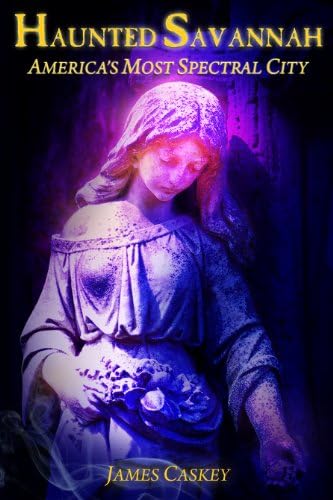
What it covers: Deep dive into over 40 of Savannah’s most infamous ghost stories and haunted locations. Caskey—local historian and veteran ghost tour guide—curates city’s paranormal lore, blending investigative research with storytelling.
Why it matters: Stands out for credibility and depth. Well-researched—strives to verify details and debunk myths, making truly unexplained stories even spookier. Considered most authoritative compilation. If a building in Savannah has ghostly reputation, it’s in this book.
Who it’s for: Perfect for ghost enthusiasts, history buffs, Savannah visitors. Even casual readers find it riveting. Delves into dark histories—more for teens and adults, not kids.
Tone/approach: Conversational with flair for dramatic. Sets scenes vividly—almost feel breeze in Wright Square, hear floorboards creak. Yet also analytical; discusses potential explanations or contradictions.
Formats: Paperback ($27)
Honorable Mentions
Savannah: A History of Her People Since 1733 by Preston Russell & Barbara Hines (1992)
For years considered “the benchmark history” for general readers. One-volume overview spanning Savannah from founding through late 20th century with period photographs. Out of print but widely available used.
Longstreet Highroad Guide to the Georgia Coast & Okefenokee by Richard J. Lenz (1999)
Though out of print, this 352-page nature guide remains most thorough resource on Coastal Georgia outdoors. Covers hiking trails, kayaking routes, nature preserves, beaches, historic sites. Includes 22 detailed maps and rich ecology/history content. Now freely accessible via the SherpaGuides website.
Mob Island by Bubba Haupt and Teresa E Ward (2023)
This insider memoir reveals Savannah’s surprising 1970s mafia connections, when Chicago Outfit figures like Lou “Louie the Tailor” Rosanova used the Savannah Inn and Country Club for secret meetings. The book claims Savannah was chosen as Jimmy Hoffa’s burial site and details how mob money funded death-row defenses for poor defendants in South Georgia. A fascinating, little-known chapter of organized crime in the Hostess City, told by the lawyer who lived it.
Lost Savannah by Luciana M. Spracher (2003)
Fascinating photographic journey into Savannah structures that no longer exist. Documents dozens of buildings demolished or altered, particularly during late 1800s/early 1900s. Cautionary tale of what can happen without preservation.
Savannah’s Little Crooked Houses by Susan B. Johnson (2007)
Endearing architectural folklore book focusing on Savannah’s smallest historic houses—quirky cottages tucked amid grand mansions. Each chapter spotlights different “little crooked house” telling story of its walls: who built it, who lived/died there, what events those walls witnessed.
Looking for Savannah-themed gifts? Check out our guide for the best Savannah-related gifts that ditch the cliched, boring ideas (sorry – no graphic tees and printed mugs here).